
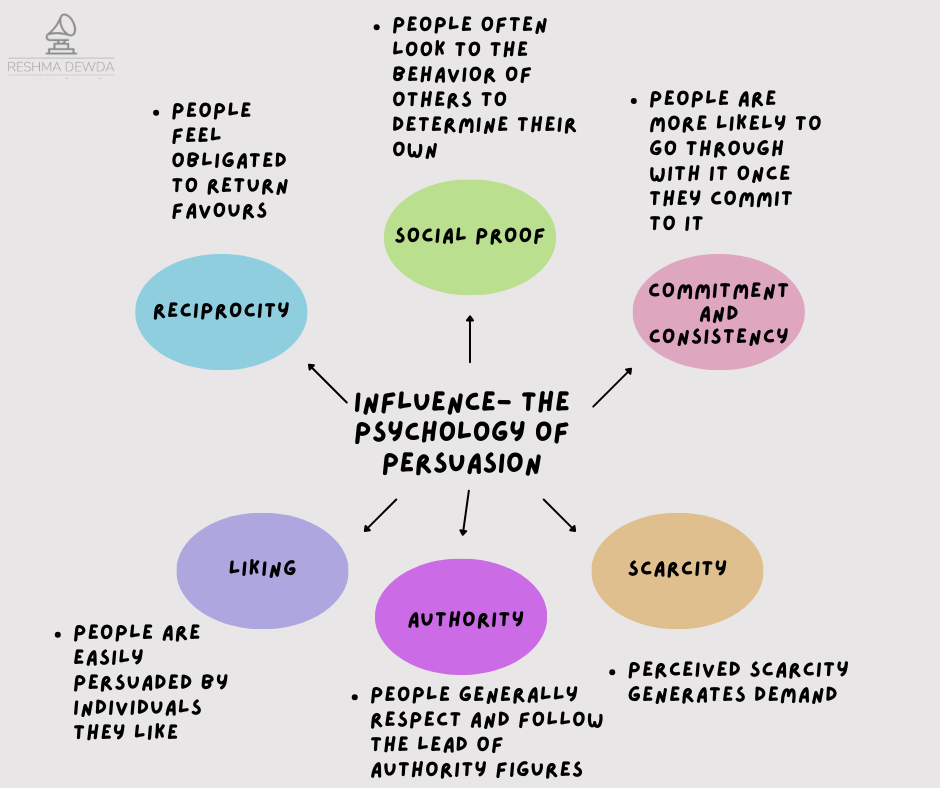
From the viewpoint of marketing, each of Cialdini’s six principles can be seen not just as tools of persuasion, but as fundamental strategies that can deepen customer relationships and enhance brand loyalty when used ethically and thoughtfully. I put together an interpretation of each principle with a marketing lens, accompanied by some “food-for-thought” to consider how these principles could evolve or be applied creatively in modern marketing practices:
- Reciprocity – Reciprocity can transform the typical transactional relationship into a more meaningful interaction. For instance, brands can provide unexpected extras or added value to surprise and delight customers, which often leads to repeat business and referrals. Food-for-thought: How might advances in customer data analytics enhance the ability to personalize these acts of reciprocity, making them not just generous but also perfectly timed and tailored to individual needs?
- Commitment and Consistency – This principle is particularly effective in content marketing and brand messaging. When a brand consistently communicates its core values and follows through with its promises, it builds a strong, trustworthy reputation. Food-for-thought: Could leveraging newer technologies like blockchain improve a brand’s ability to demonstrate commitment and consistency, thereby increasing consumer trust?
- Social Proof – In the digital age, social proof extends beyond testimonials and word of mouth to include social media influences, online reviews, and user-generated content. These elements are crucial in shaping consumer perceptions and decision-making processes. Food-for-thought: What role could augmented reality play in enhancing online social proof, perhaps by allowing potential buyers to see real-time product reviews or usage by peers within their physical environment?
- Authority – Brands often use experts or influencers to communicate their message, leveraging the authority principle. This creates an association of knowledge and credibility with their products or services. Food-for-thought: As consumers become savvier and possibly skeptical about traditional authority figures, how can brands innovate in identifying and leveraging new forms of authority that resonate with modern audiences?
- Liking – The affinity a consumer has towards a brand can significantly impact their buying decisions. Marketing campaigns that invoke emotional resonance or personal connection can be highly effective. Food-for-thought: In an era of increasing automation and artificial intelligence, how can brands maintain a genuine sense of likability and human touch?
- Scarcity – Limited-time offers or exclusive releases can create a buzz and increase demand. However, this needs to be handled delicately to avoid frustrating customers. Food-for-thought: Could dynamic pricing models, which adjust availability or price based on demand, be a future way to ethically employ scarcity without alienating consumers?
Employing the reciprocity principle in retention strategies involves creating positive and memorable experiences for customers that encourage loyalty and repeat business. Here are several effective ways brands can use reciprocity to enhance their retention strategies:
- Customer Rewards Programs: Implementing a rewards program that offers points, discounts, or other benefits for frequent purchases is a direct way to practice reciprocity. It not only rewards customers for their loyalty but also incentivizes continued engagement with the brand.
- Exclusive Offers and Perks: Providing exclusive offers, early access to new products, or special services to returning customers can make them feel valued and appreciated. This could include special members-only sales or access to VIP customer support lines.
- Personalized Gifts and Samples: Sending personalized gifts or free samples to long-term customers can be a delightful surprise that strengthens their emotional connection to the brand. The key is personalization—making the gift relevant to the individual’s preferences or past purchases.
- Thank You Notes and Messages: Sometimes, a simple thank you can go a long way. Personalized thank you notes, whether digital or physical, show customers that their business is genuinely appreciated and not taken for granted.
- Invitations to Exclusive Events: Inviting loyal customers to exclusive events, whether online or offline, can make them feel like part of a special community. These could be product launches, webinars, workshops, or customer appreciation events.
- Engagement-Based Incentives: Rewarding customers for their engagement with the brand (like leaving reviews, participating in surveys, or sharing products on social media) not only encourages further interaction but also deepens their investment in the brand.
- Customer Anniversary Rewards: Celebrating the anniversary of a customer’s first purchase or sign-up can be an effective use of reciprocity. Offering a special discount or a free product on their anniversary can make customers feel recognized and valued on a personal level.
- Improvement Based on Feedback: Showing customers that their feedback has led to real changes demonstrates that the brand values their input and is committed to improving their experience. This can increase customer satisfaction and loyalty.
In an era where automation and artificial intelligence are becoming more prevalent, maintaining a genuine sense of likability and human touch is crucial for brands to foster deep and lasting connections with consumers. Here are some strategies brands can employ:
Storytelling: Use storytelling to share the brand’s values, mission, and the people behind the products or services. Stories that highlight the human elements of the brand can create emotional resonance with consumers.
Humanize Brand Communications: Even in automated messages, the tone can be friendly, warm, and personalized. Using conversational language and including elements that reflect the brand’s unique personality can make communications feel more personal and less robotic.
Blend High Tech with High Touch: Use technology to enhance, not replace, human interaction. For example, while AI can handle initial customer service inquiries, complex or sensitive issues should be swiftly handed off to human representatives who can provide empathy and nuanced support.
Personalized Experiences: Leverage data analytics to tailor experiences to individual customer preferences and needs, but ensure that this personalization respects privacy and feels genuinely helpful rather than intrusive.
Empower Employees: Encourage and train employees to express their personality and empathy when interacting with customers. When staff members are engaged and empowered, they are more likely to convey genuine enthusiasm and care in their customer interactions.
Community Engagement: Create opportunities for customers to engage with the brand and each other in meaningful ways. This could be through online forums, social media groups, or live events that encourage interaction and build community.
Transparency and Ethics: Being open about how data and AI are used can build trust. Brands that prioritize ethical considerations in their use of AI are more likely to be viewed favorably by consumers.
“Influence: The Psychology of Persuasion” is not only a foundational text in the fields of marketing and psychology but also a practical guide for anyone interested in understanding and improving their persuasive capabilities. Cialdini’s engaging narrative, packed with historical examples and his own undercover research, makes this book a compelling read for professionals and general readers alike.
 Marketing and Branding Strategy
Leave a comment