

If brand building is like the cement that glues all your business decisions, then brand reputation is like the foundational building blocks for the organization.
Branding is the process of making a recognizable, relatable identity for your business. It includes crafting a visual identity, a compelling vision and telling a unique story.
Building a brand reputation is closely linked with brand building. It is demonstrated trustworthiness and consistency in action that leads to customer loyalty and advocacy.
While both branding and building a reputation go hand in hand, an organization has limited resources that need to be prioritized. That often leads to other branding efforts taking a higher priority than reputation building. But I would argue that if one had to choose, the best place to begin is with building your reputation.
Building a brand reputation begins with delivering high quality products and services and extends to customer experience, ethics in policy and thought leadership too.
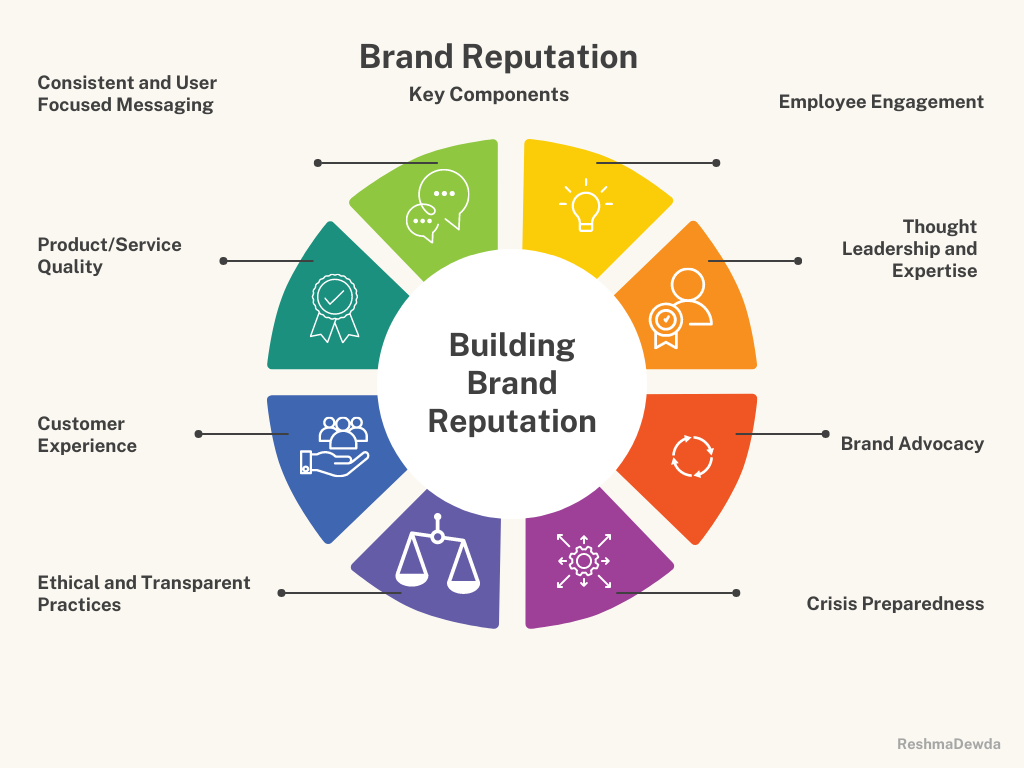
Building a brand reputation encompasses various elements and activities. Here are the key aspects involved in establishing and maintaining a strong brand reputation:
Consistent User Focused Communication:
Educating your user about solving their problems, using your product and improving their lives is a key part of building trust with them. Keep your communication regular, transparent and as user-centric as possible
Product/Service Quality:
Delivering high-quality products or services is essential for building a positive reputation. Consistently meeting or exceeding customer expectations fosters trust, satisfaction, and loyalty. Focus on continuous improvement, innovation, and providing exceptional value to customers.
Customer Experience:
Every interaction a customer has with your brand shapes their perception. Providing a seamless and positive customer experience at every touchpoint, from pre-purchase to post-purchase, is crucial. This involves personalized customer service, responsiveness, ease of use, convenience, and prompt issue resolution.
Ethical and Transparent Practices:
Conducting business with integrity and transparency is vital for building trust and credibility. Upholding ethical practices, being transparent about business operations, and demonstrating social and environmental responsibility contribute to a positive brand reputation.
Employee Engagement:
Your employees are ambassadors of your brand. Engaged and motivated employees who align with your brand values can positively impact the brand’s reputation. Encourage a positive work culture, provide training and development opportunities, and ensure employees feel valued and supported.
Thought Leadership and Expertise:
Positioning your brand as a thought leader in your industry helps establish credibility and trust. Share industry insights, expertise, and valuable content through various channels such as blogs, whitepapers, social media, and speaking engagements. This showcases your brand’s knowledge and positions it as a go-to resource.
Brand Advocacy:
Encourage and empower satisfied customers to become brand advocates. Positive word-of-mouth recommendations, testimonials, and user-generated content can significantly impact brand reputation. Engage with your customers, encourage feedback, and provide opportunities for them to share their positive experiences.
Online Reputation Management:
With the digital landscape, online reputation management is crucial. Monitor and manage online reviews, social media mentions, and other digital platforms to address any negative feedback promptly and proactively. Engage with customers, respond to inquiries, and resolve issues in a transparent and professional manner.
Crisis Preparedness:
No brand is immune to crises. Having a well-defined crisis management plan in place helps protect your brand reputation during challenging times. Anticipate potential risks, establish clear communication protocols, and respond quickly and authentically when facing crises or negative situations.
Continuous Monitoring and Evaluation:
Building and maintaining a brand reputation is an ongoing process. Regularly monitor your brand’s reputation through surveys, social listening tools, and feedback channels. Evaluate the effectiveness of your reputation-building strategies, make necessary adjustments, and adapt to changes in customer expectations and market dynamics.
Brand reputation directly influences customer trust and loyalty. A strong reputation built on positive experiences, quality products/services, and ethical business practices fosters trust among consumers. Without trust, customers are less likely to engage with the brand, purchase its products/services, or recommend it to others.
In today’s highly competitive marketplace, brand reputation can be a crucial differentiator. A positive reputation sets a brand apart from its competitors, as it demonstrates reliability, credibility, and a commitment to customer satisfaction. This advantage can lead to increased market share, customer retention, and sustainable growth.
It also plays a vital role in managing and recovering from crises. No business is immune to negative incidents or public scrutiny. However, a strong reputation acts as a buffer during challenging times. It helps to mitigate the impact of negative events, maintain customer support, and facilitate a quicker recovery.
A positive brand reputation not only attracts customers but also attracts and retains top talent. Employees take pride in working for a reputable brand and are more likely to be engaged, motivated, and loyal. This leads to higher productivity, lower turnover rates, and a positive work environment.
It influences relationships with stakeholders such as investors, suppliers, partners, and the community. Positive brand perception attracts potential investors, enhances partnerships, and strengthens relationships with suppliers. It also fosters goodwill within the community, which can lead to favorable public relations, better government relations, and increased support.
Brand reputation is an asset that can contribute to the long-term sustainability of a business. By prioritizing reputation over short-term branding tactics, companies can build a strong foundation for continued success. A positive reputation can weather market fluctuations, economic downturns, and industry changes, ensuring the brand’s resilience over time.
Dive in Next:
 Marketing and Branding Strategy
Leave a comment