

There’s never been a better time to begin a business. Whether it’s from your garage, your bedroom or a swanky glass building, there’s plenty of opportunity to sell whatever you feel like – product or service.
But it is also a time where choices abound for always-online customers. To create a brand that perfectly encompasses what you have to offer, brings out your uniqueness and gives customers what they’re looking for has become not just difficult, but an elusive dream for many.
There are several problems that you can face while getting started with branding. Some of the most common ones include:
Lack of clarity:
Many businesses struggle with articulating their brand clearly and consistently. This can lead to confusion among customers and can make it difficult to establish a strong brand identity.
Inconsistency:
Inconsistent branding can weaken a brand’s impact and make it difficult for customers to identify with the brand. This can include inconsistencies in messaging, visual branding, and tone of voice.
Lack of differentiation:
In a crowded market, it can be difficult to stand out from the competition. Many businesses struggle to differentiate themselves from other similar businesses in their industry, which can make it challenging to build a unique brand identity.
Failure to evolve:
Brands need to evolve over time to stay relevant and engaging to their target audience. Some businesses may fail to adapt to changing market trends or customer needs, which can lead to a decline in brand appeal.
Poor customer experience:
A negative customer experience can have a significant impact on a brand’s reputation. This can include poor customer service, unclear messaging, or a lack of transparency in business practices.
Ineffective communication:
Effective communication is critical for building a strong brand. If a business fails to communicate its value proposition, mission, and core values effectively, it may struggle to build a strong brand identity.
Limited resources:
Building a strong brand requires resources, including time, money, and talent. Many businesses may struggle to allocate sufficient resources to branding efforts, which can limit their ability to build a strong and impactful brand.
Building a memorable brand is a combination of understanding your uniqueness, tapping into your purpose, aligning it with your customer’s needs and articulating the same story in a hundred different beautiful ways. It’s like finding your ikigai. The confluence of purpose, profitability and preference.
But if you don’t give importance to building a memorable brand, you will find your brand lost in a sea of mediocrity. Forgettable and struggling to retain customers.
Are you looking for a place to start your branding strategy, start with building clarity. Because if you’re clear where you’re going, the journey becomes more organized and pleasant.
Define your brand:
Start by defining what your brand is and what it stands for. This includes your brand’s purpose, mission, values, and personality. Clarify what makes your brand unique and what sets it apart from your competitors.
Know your audience:
It’s important to understand who your target audience is, what their needs and preferences are, and how your brand can address those needs. This will help you tailor your messaging and brand positioning to better resonate with your audience.
Develop a brand strategy:
A brand strategy outlines how you will achieve your brand’s objectives and goals. This includes identifying your brand’s key messages, tone of voice, visual identity, and communication channels. Your brand strategy should align with your business goals and support your overall business strategy.
Create a visual identity:
Your visual identity includes your logo, color palette, typography, and imagery. It should be consistent across all channels and reflect your brand’s personality and values. Your visual identity should also be designed with your target audience in mind.
Craft your messaging:
Your messaging should be clear, concise, and consistent. It should communicate your brand’s key messages and unique value proposition in a way that resonates with your target audience. Your messaging should also reflect your brand’s tone of voice and personality.
Consistently execute:
Consistency is key when it comes to branding. Ensure that your brand’s visual identity, messaging, and tone of voice are consistently executed across all channels, including your website, social media, advertising, and packaging. This will help build brand recognition and strengthen your brand’s impact.
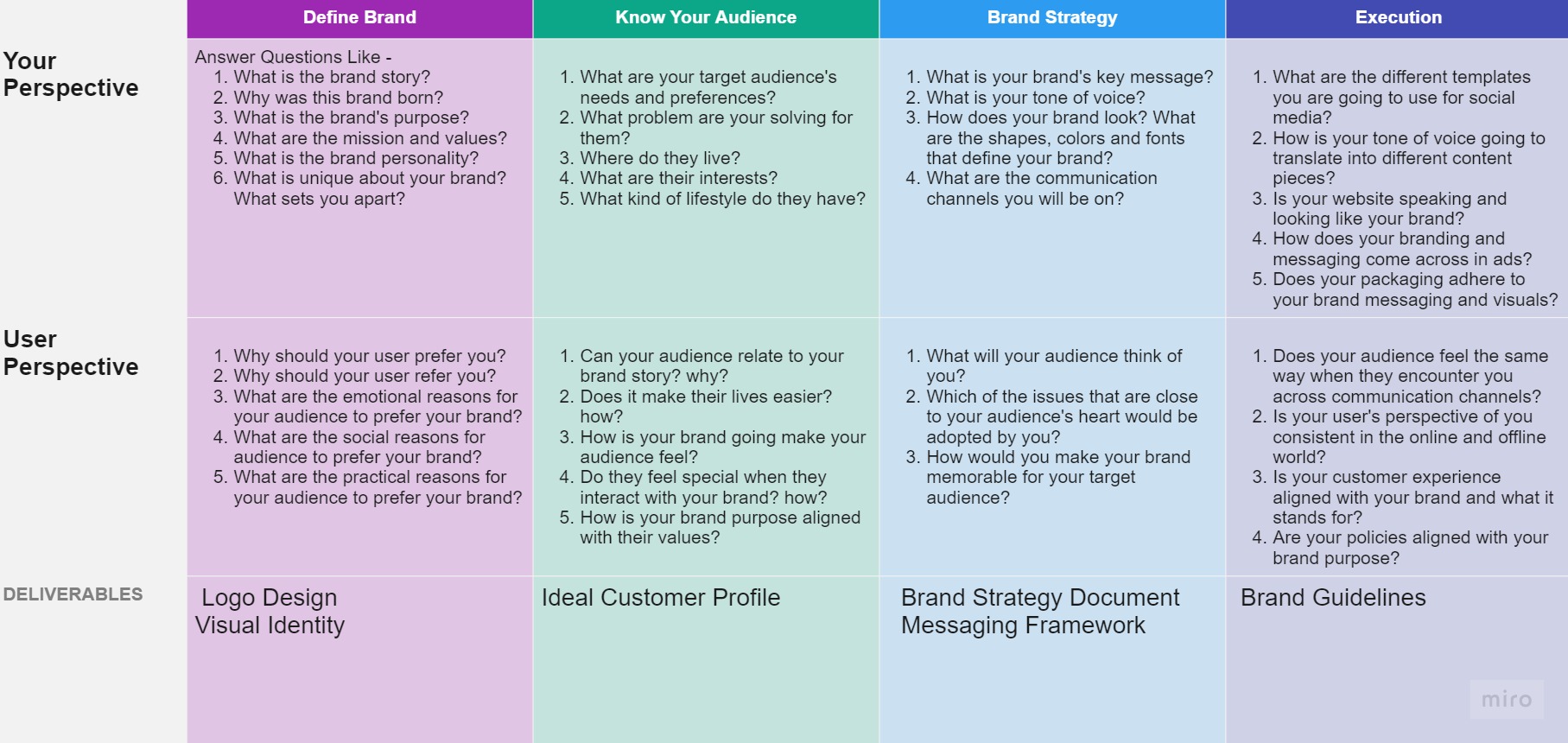
By following this framework, you can build clarity in your branding efforts and create a strong and impactful brand identity.
What are the elements of a good brand?
Purpose: A strong brand has a clear purpose that resonates with its target audience. This purpose should be reflected in all aspects of the brand, from its messaging to its visual identity. An example of a brand with a strong purpose is Patagonia, which is committed to environmental activism and sustainability.
Consistency: Consistency is key when it comes to building a strong brand. All aspects of the brand should be consistent, from its visual identity to its messaging and tone of voice. This helps to build brand recognition and trust with customers. An example of a brand with strong consistency is Apple, which is known for its sleek, minimalist design and consistent messaging across all channels.
Differentiation: A good brand stands out from its competitors and has a unique value proposition that sets it apart. This can be achieved through a distinctive visual identity, unique messaging, or a unique product or service offering. An example of a brand with strong differentiation is Tesla, which is known for its innovative electric vehicles and commitment to sustainability.
Authenticity: Authenticity is increasingly important to consumers, and a good brand should be authentic and transparent in its values and practices. An example of a brand with strong authenticity is Ben & Jerry’s, which is known for its commitment to social justice and ethical sourcing practices.
Emotional connection: A good brand should create an emotional connection with its target audience. This can be achieved through storytelling, strong visual imagery, and messaging that resonates with customers on an emotional level. An example of a brand with strong emotional connection is Nike, which has built a powerful brand identity around the themes of inspiration, empowerment, and achievement.
A branding strategy is more than just colors, logo design and typography. It is a commitment to deliver a consistent user experience each time. It is a feeling that you craft out that is exclusively for your customer across all channels of communication. Like a principle that you live by, your brand defines every action you take in your business. Take the time to develop a brand that seems natural to you and special to your customer
Let’s work on building your brand together.
Dive in Next –

 Marketing and Branding Strategy
Leave a comment